017 - Eric Jumper
Legos and a Hard Hat
A profile of Eric Jumper, MRT Manager, Muschlitz Excavating
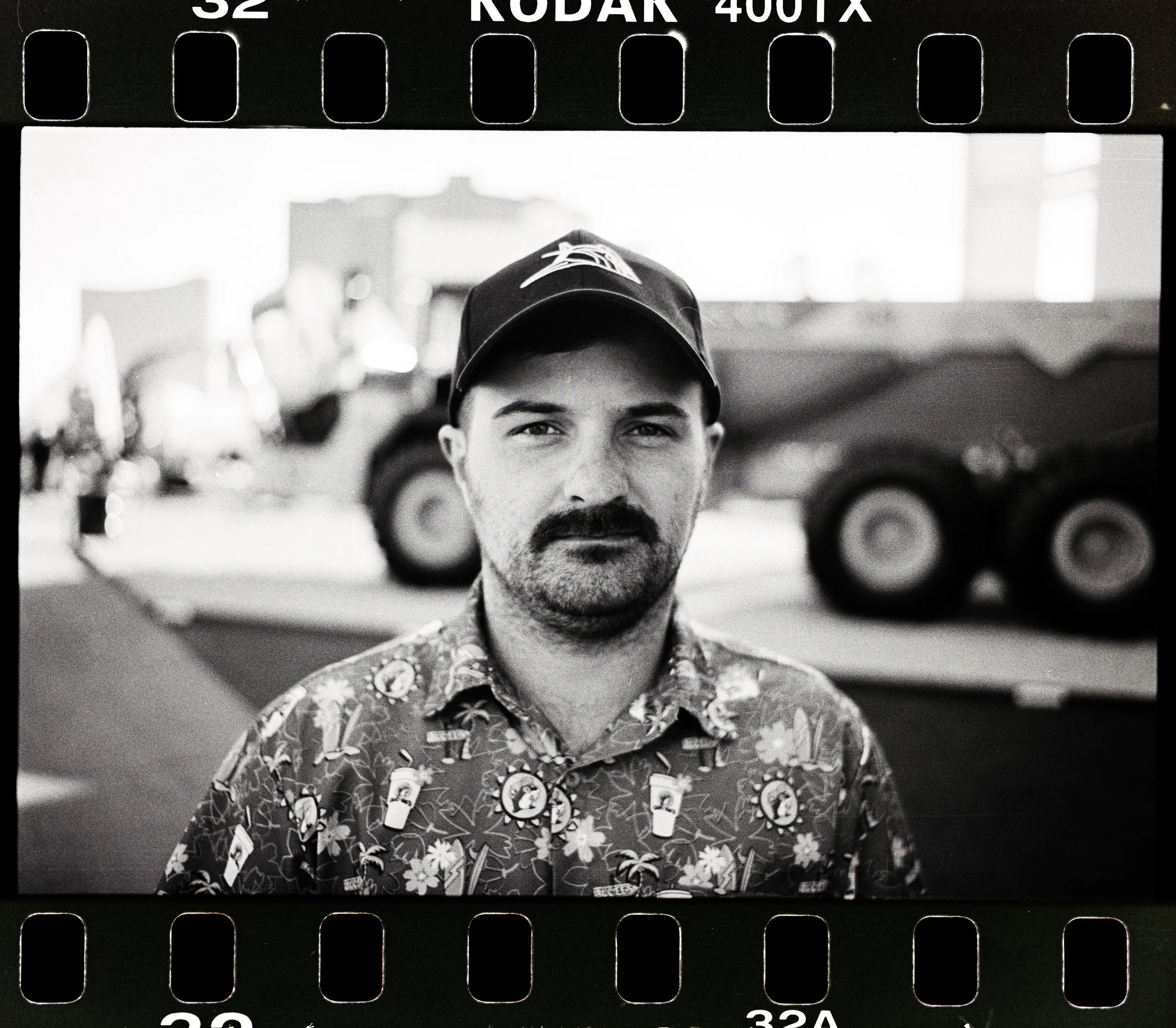
Portrait of Eric Jumper in Las Vegas, Nevada at ConExpo 2026. Shot on 35mm Kodak Tri-X 400 film with Leica R6.2.
Ask Eric Jumper how he got into construction and the first answer you get is a joke.
"I fell down a manhole one day."
Eric works for Muschlitz Excavating in Bath, Pennsylvania, where his title is MRT Manager. He's also the estimator and business development manager for Stealth Clearing and Demolition. The real answer to how he got here took him a minute, because he's rethought it.
"I used to say I was born into it. And I realized not too long ago that I wasn't really born into it, because I have two brothers and a sister and all of them are in the military. And I'm not from a military family. So maybe not so much born into it, but maybe raised in the culture of construction is what led me to it. And being in that culture made it seem like the easiest path for me."
There was one time he looked seriously at a different road.
"I looked at law enforcement quite a bit when I was in high school. I actually applied to be a border patrol agent before it was cool to be a border patrol agent. They were paying really good at one point. I was like, 'That'd be a really neat job.' I still kind of regret not doing that."
He dabbled with snowcats at ski resorts too, but never as a career. The pay was just so terrible.
It Can’t Be That Hard
That word, easiest, wasn't a slip. Eric has never thought of the work as hard.
"I've never looked at construction as a whole as difficult. I don't think I've ever said to myself, 'Yeah, what a hard job I have.' You have tough days, but as a whole, I've never said, 'I don't like doing this because it's hard.'"
Why not? Does it just feel easy?
"It's challenging. I don't want to say it feels easy, but building things is like a big math problem most of the time. Even if you're bad at math like I was. It's a job where they give you instructions like Legos and a hard hat, so it can't be that hard. You really got to work to mess something up in construction."
It's not a view you hear often.
"Can I build a house? No. But I can probably figure it out, because all the instructions are there."
It's how he looks at work, too. Eric has always been involved in job acquisition and project development, and he bids on a lot.
"I look at things that our company would never even think about doing, just to explore the idea of, 'Is this something we're set up for? Can we do this?'"
The Bar and the Cap
What does working in construction demand of a person? Eric doesn't dress it up.
"The bare minimum, honestly. If I can get a guy who gets out of bed in the morning on time, shows up, is present, can lift 25 pounds, is not intoxicated or drugged up, and asks questions, that's literally all it takes to be in construction. That is the bar."
That's what it takes to get in. Doing well, and building a career out of it, takes one thing more.
"Drive. The desire to want more out of what you're doing."
At lunch one day, a board member watched how excited Eric got around the machines and asked him how he ever ended up walking away from operating every day.
"I was like, 'Well, there's a cap.' When you're running a machine, your wage, your place on the ladder, what you can do with your life, it all stems back to your cap in your career. And that cap for being an operator or a laborer is how much you as one person can physically do. They're only going to pay me to run one machine for 10 hours a day, because I can only run one machine for 10 hours a day. And that only allows me to make so much money. So wanting to be higher on the pedestal, and wanting more out of my life financially or career-wise, it takes that level of drive and wanting to learn more to get there."
Not everyone wants that, and he says so.
"There's people that are totally content with where they are. They've learned what they're comfortable with, and they're good at what they do, and they make enough money, and that's it."
Not Dreading Where You Work
What is he most proud of? Lately, it's something he's been put in charge of.
"What I've been responsible for lately is building culture. I think we have a lot of work to do, but it makes me proud that I can provide a better culture for people, and a better workspace, and an environment that they feel like they're achieving something."
What does a better culture look like, and better than what?
"I think people always preach like, 'Oh, we have good culture, we have good culture.' But then they have a toxic work environment most of the time. They don't realize it. I think a good culture is being able to wake up in the morning and not dread going to where you have to work. Work is work. It shouldn't always be fun. It's going to suck sometimes. You're not there to get paid to have fun. But you should be able to enjoy the environment that you're in."
Is there still a stigma across the industry, that "we're just construction workers"? Eric thinks it's getting better, and he has a prediction that runs against what the industry has been saying for years.
"You know how we've been saying for the last five, six, seven years that we have a workforce shortage? I think by the next two years, we're going to have an oversaturation of people in the industry. I know this because at any given moment, I have 150 resumes on my desk. Most of them are qualified enough to work for us."
Key positions are still hard to fill. Welders, managers. Those, he says, they build up from within. But he thinks all the new people coming in are pulling the culture back up.
"People are kind of seeing through all the grumpy guys, or they're not tolerating it. I think a lot of that stems from, people didn't know any better. Now you have people coming in from completely different industries that just don't give a fuck, and they're just, 'Oh, you're grumpy? Get over it, I'm here.'"
How the World Works
How does he feel about being a blue-collar person?
"Pretty good. I feel down to earth. I meet a lot of people that don't do labor for a living. They don't get it most of the time. There's this barrier between white collar, blue collar. And you could tell just by listening to the news. 'Oh, a bulldozer hit a bridge today while being transported by a truck.' It's not a bulldozer. The terminology, the misconceptions alone. There's a huge disconnect."
For Eric, it goes deeper than vocabulary.
"They don't care to learn. People that aren't in it, that are in their own bubble, that are living off of what we're building for them, they don't care. They just know that the world around them works. And when it doesn't and they're inconvenienced, they're so mad about it. But it's because they don't know how things work. I don't know how everything works, but I know how enough works to get me by. And that's important."
What does knowing how the built world works give him in his own life?
"I guess it gives me respect. It gives me an extreme appreciation for what other people do. If I know how critical even the smallest job is, like the guy behind you picking trash up. I'm like, 'I don't want to walk around on trash. That guy's job's really important. We should pay him enough money that he wants to keep doing that.'"
It cuts the other way, too.
"It also gives me an absolute disrespect towards people that I know don't do anything. There's a lot of bullshit jobs out there."
Are You Moldable?
A lot of the people in those jobs apply to Muschlitz. And Eric is the one who has to decide.
"I get a lot of applications for people that are doing bullshit jobs. It's kind of tough for me as the one that has to bring them into the fold, because I have to make the determination of, 'Is this guy just going to come here and continue a bullshit jobness and not do anything? Or is he breaking the mold and wants to do something more with his life?' It's a gamble. It usually never pays off."
Has it ever? Eric's answer came with a name.
"One of my favorite people I've ever worked with, his name is Coy. I kind of hope he sees this. He's the nicest guy. When I came back to Muschlitz, he was one of the first people in the field that I ran into. And first thing he does, hands me a little Jesus, a 3D-printed Jesus statue. I still have it in my company truck. It sits on my dash."
Coy came to Muschlitz after retiring from 20 years as a mortician and a coroner. He just wanted to do something completely different.
"We hired him just based on his personality alone. And I think that says a lot about a person, when you can be hired into this industry with zero experience, in a completely different industry altogether, and get hired based solely on the fact that you have a good attitude."
Eric didn't interview Coy himself. But he'd made what he calls somewhat of a culture hire the week before, a surveyor.
"It's a hard position to fill. So the fact that I was able to get one in the door for an interview was a big deal. And the guy shows up to this interview for a field job, suit, tie, ready to go, had three copies of his resume. Super nice dude."
He was qualified for the job. What stuck with Eric was how he handled the questions he couldn't say yes to.
"He said no to some things. He's like, 'Well, I've never done that before, but I'm sure if you showed me how to do it.' The guy could not lie. And if nothing that he had was what I needed, I probably would've still thought about hiring him, just because he's a guy that I know I can train."
That's the whole philosophy, as he puts it.
"I think that's important with this industry. I'm not looking for resumes. I'm not looking for boxes checked. I'm not looking for, 'Do you have this education, this degree? Have you done this experience?'
"'Are you moldable?' is the biggest thing I'm looking for when I'm trying to find people in the industry."
Keep Pushing
If all those people are coming, what will it take for contractors to bring them in and actually succeed? Eric is less optimistic here.
"I think they need to accelerate them past the current entry level, because the problem's actually going to get worse. Not only do you have a lot of entry-level people coming into the industry that would take entry-level jobs, you have tech taking over those same exact jobs. I think it's going to be a problem, honestly. I'm a little worried about some of this stuff we're seeing."
The biggest problem the industry faces, in his view, is simpler.
"Probably just wages. I think wages are still too low. I don't think we've caught up with other industries as far as pay, benefits, things like that. So I think we're going to lose a lot of people to that."
And past that, he says, pick anything.
"Fuel's a problem. Business is a problem. Work's a problem. Markets are a problem. It's all a problem."
So how does he keep his head up? The night before, Eric had talked with Devin Dyer on a podcast, and Dyer did a ten-minute monologue about his brand. The whole idea was that you could be going through the worst thing ever, and you keep pushing.
"You're here, so you got to provide. You got to do what you got to do. Just keep pushing. That stuck with me pretty well."
How Did They Build All This?
How has this career changed him into the person he is today?
"It's made me more interested in everything. Learning how my job specifically works has made me more interested in everything else, like music, infrastructure, communications, IT, all that stuff. Anytime I find something, I'm trying to figure out how it works or how it was built. Even just walking through all these casinos, like, 'How do they build all this stuff?' It's being in construction that has made me constantly questioning and interested in things."
His favorite thing about the industry isn't the machines.
"Probably the people. The equipment's fun and all that's cool, but being able to work with like-minded individuals and not be stuck in a corporate atmosphere is nice."
And his message for the industry at large is about what people see on their phones.
"Don't let social media skew your perspective or your values. There's a lot of fake on the internet. There's a lot of, 'Hey, I've got all this cool stuff.' And you look at that and you're like, 'Why don't I have all this cool stuff? I'm doing the same thing.' It's a lot of fakeness. It's a lot of people trying to look bigger than they actually are. So just take everything with a grain of salt."
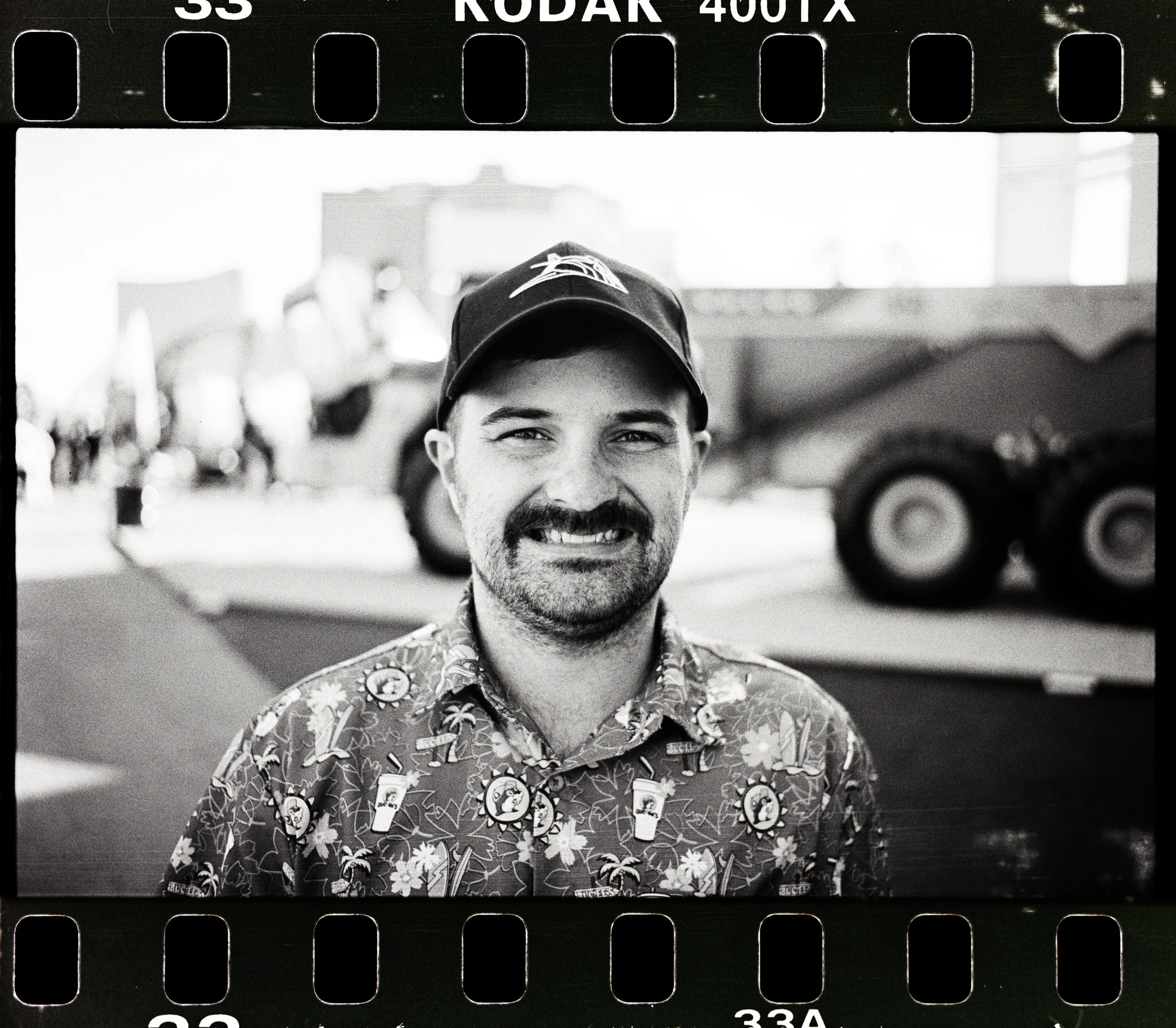
Eric Jumper is the MRT Manager at Muschlitz Excavating in Bath, Pennsylvania, and the estimator and business development manager for Stealth Clearing and Demolition.