006 - Barry Bridges
It Feels Like Freedom
A profile of Barry Bridges, Project Manager, Fullmer Excavation
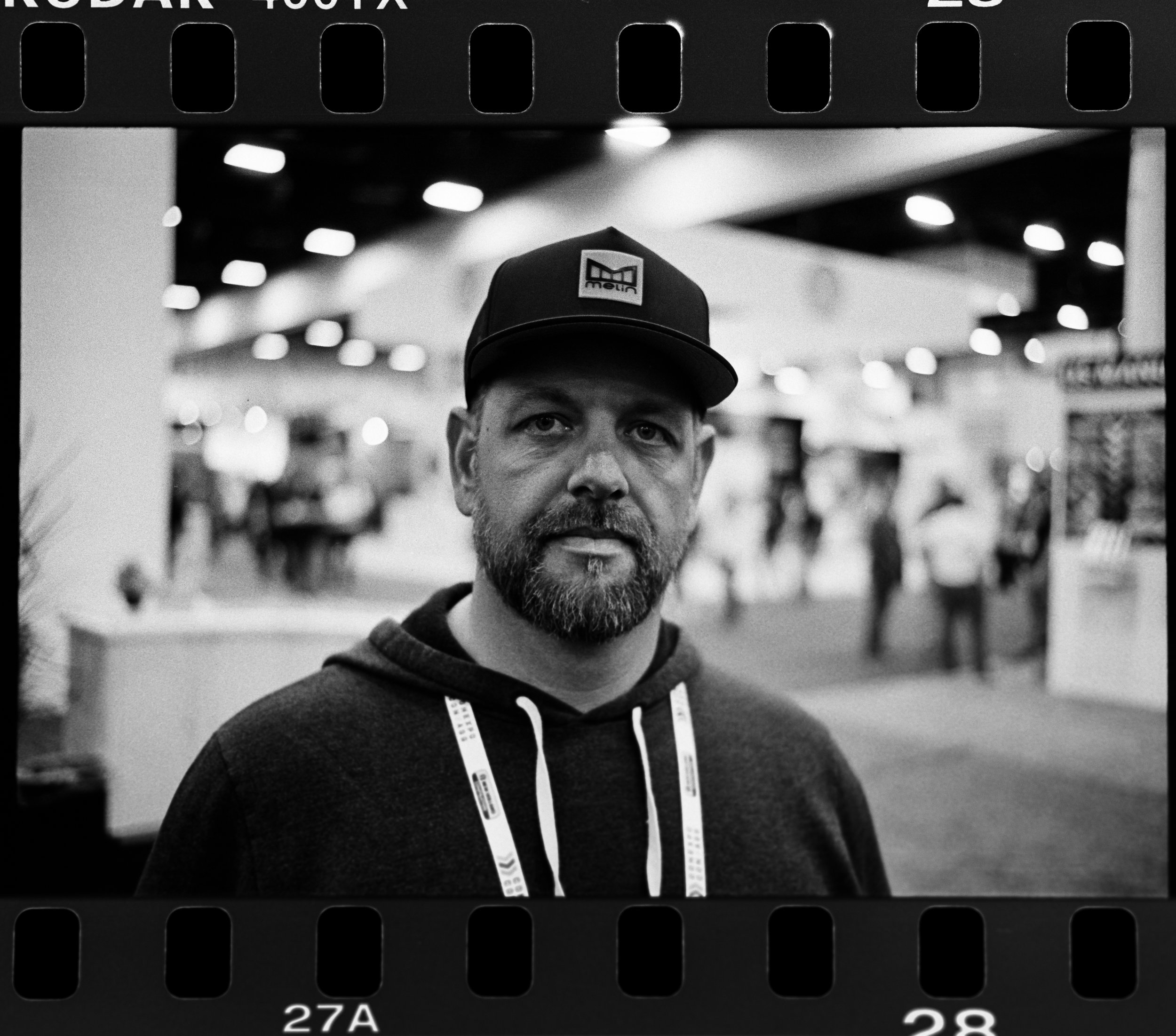
Portrait of Barry Bridges in Las Vegas, Nevada at ConExpo 2026. Shot on 35mm Kodak Tri-X 400 film with Leica R6.2.
Barry Bridges started earning his own money when he was a little kid.
"When I was a kid, we were kind of poor. My dad told me if I wanted to buy some stuff, I had to earn my own money. So I started working for my grandpa when I was eight."
His grandpa owned a land development company, and Barry grew up on the equipment, working through high school. It set the course for everything after. He's been in the industry his whole life, and today he's a project manager at Fullmer Excavation.
"We're a mid-size excavation company. We do residential and commercial land development. We got seven pipe crews, four dirt crews, and a couple finish crews."
But the road from his grandpa's subdivisions to a management position in Utah ran through some of the most remote job sites in North America.
Alaska
Out of high school, Barry joined the union in Alaska, where he grew up in Eagle River, and went to work for a big outfit called Alaska Frontier Constructors. His first project dropped him straight into the deep end.
"The first project I was involved with right out of high school was for the Pogo Gold Mine out of Delta Junction. We built like 58 miles of road, 14 timber bridges to access the mine site. And then we moved like 36 million yards to prepare for the new mine there."
He'd run equipment as a kid, but nothing like this. "I had a lot of experience running equipment as a kid, but smaller stuff, just doing 20 or 30 lot subdivisions for my grandpa. And then going out to that [the Pogo Gold Mine], being involved in that stuff. We had 25 or 30 haul trucks, big 385 cat excavators at the pit. So I got to experience a lot of stuff that I'd never been around, a lot of drilling and blasting and just mass earth work. It was fun to be involved with. I learned a ton."
Then came the ice roads.
"They build miles and miles of ice roads every winter to service exploration areas up in the oil fields in Alaska. So I built ice roads in the winter, and then I spent a few summers up there and we'd do the gravel roads. There's a lot of environmental regulations there that you can't drive on the Tundra when it's thawed. So we'd get permits, drill and blast just natural gravel in the riverbanks up there on the Arctic and haul and place it on the alignment and let it thaw out in the summertime. Then we'd go back through and have to regrade it all because it would all settle through the thaw."
A Way of Life
For Barry, construction was never really a decision. It was just what he was.
"Ever since I was a kid, doing it my whole life, it's my passion. I knew from the time I was a little kid this is what I wanted to do. So it's just, yeah, I love it."
What he loves most is the problem solving.
"I'm not really the type, suit and tie to the office. I like to go chop it up with the guys in the field. I was fortunate enough to learn a lot as a kid and was able to get a lot of experience that people don't get until they're older. So I just felt like that was what I was meant to do."
He takes real pride in the work, and he ties it directly to his name.
"I take a lot of pride in what I do. I care a lot about my personal reputation, which then reflects upon whatever company I'm working with. So I just like to do quality work and help solve problems. That's probably my favorite part, being able to help clients save money on jobs by thinking of some innovative ways where we can do things differently."
He's honest about how his mind works, too. "I'm super ADD, and so a million phone calls a day while I'm on my computer building models and doing takeoffs and bidding, and it works well with how my mind works. Just going a million miles an hour. One day the wheels might fall off, but they haven't yet. So I keep cranking."
Always Learning
If there's one thing Barry believes, it's that you never stop learning.
"You learn new things every day, and if you're not learning something new every day, you're doing it wrong."
His own career is the proof. He came up entirely in earthwork, then kept adding to it.
"I grew up never doing pipe work. It was always earth work. And then got onto a paving crew and learned how to pave and learned asphalt plant operations, and used to help haul and set up and tear down our portable plants every year."
The move to Utah and into management opened up a whole different kind of learning, the parts of the business he'd never had to think about in the field.
"When I moved here [to Utah] and got into management, working for Granite, I started to learn on that side of things. Worked for such a large company, all the procedural things and all the paperwork that I didn't understand the necessity and purpose of it all until I was there and understood why it was important."
For Barry, the learning never comes only from the work itself. A lot of it comes from the people he meets along the way.
"You meet new people that have expertise in things that you don't. And even if you only learn one thing from them, it's one more thing I know that I didn't know yesterday."
Perspective
Ask Barry how the work has changed him, and his answer isn't about the work at all. The scale of what can go wrong on a job site recalibrated what's worth worrying about at all.
"There's a lot of big issues that happen on some projects and some safety things that are kind of scary. And it just puts things in perspective where things that used to stress me out in my personal life don't stress me out anymore. It's like, 'oh, we just lost a million dollars today, hit a fiber line on a job.' So my kids spilling a cup of milk at home is not a big deal. I think that's helped me balance my life better, understanding what's important to get worried about and what's not."
Behind the 8 Ball
Barry finished his degree at 32, years after most of his peers. For a while, that gap ate at him.
"I felt like I was behind the 8 ball. A lot of my friends had graduated college at 22 and were already project managers and making good money. And here I was going into the office at 29 years old thinking I was behind the curve, when in actuality I was ahead of everybody else because of my field experience."
That realization is the heart of what he'd tell anyone coming up in the industry.
"The biggest thing is work hard, do more than you're asked to do. It's one of the biggest issues I see, guys that have an assignment and they only do that assignment and they barely get that done. You put in the extra hours, crank on stuff, people will recognize your hard work and it's only going to benefit you personally. You'll learn more, become more efficient, become more valuable to your company, and then your career is just going to take off."
He's lived it. "I'm 40 years old now. I've only been in management for 11 years. I was a deputy project manager on Bangerter Highway with five years of management experience, and it was a $160 million design build project. It's like, I shouldn't have been in that position with the short management experience I had, but I worked my ass off and was able to get to that point."
The Bangerter Highway project Barry referred to was a major, multi-year reconstruction of one of the main highways in the Salt Lake Valley.
It Feels Like Freedom
Ask Barry his favorite thing about the industry and he doesn't reach for the money or the machines. He reaches for a feeling.
"It feels like freedom almost. One of my favorite things is in the mornings, especially in January, February, sunrises out on a job site when stuff's just getting fired up in the mornings. We haven't really met for safety meeting, it's 6:30 in the morning and it's just peaceful. People aren't out and about yet. It's fun and it makes you feel like you're actually doing something."
The other part is watching an idea become real.
"It's nice to be able to see the progress of what we're doing. Taking it from preliminary design with our clients, helping them through some value engineering stuff, and then actually being able to see the project come to fruition. I do a lot of our modeling and all of our earthwork takeoffs. So when I build those and put them in 3D and be able to see that and help plan the project and then watch it come to fruition, that's probably the most rewarding thing to me. It's just fun. I love it."
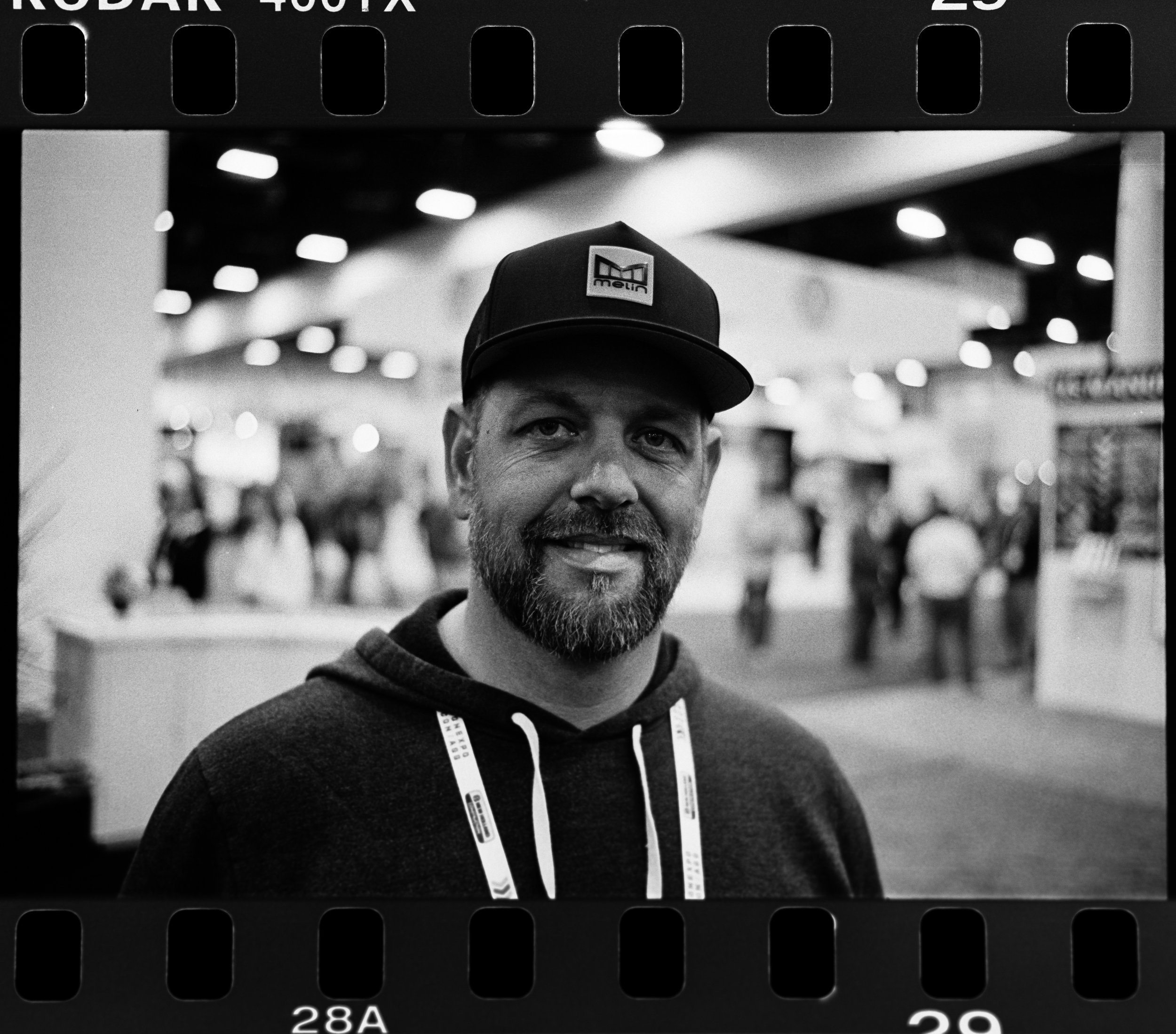
Barry Bridges is a Project Manager at Fullmer Excavation and lives in Sandy, Utah.