008 - Kevin Soller
Just Tractors
A profile of Kevin Soller, Spider-X Operator, All Mountain Construction
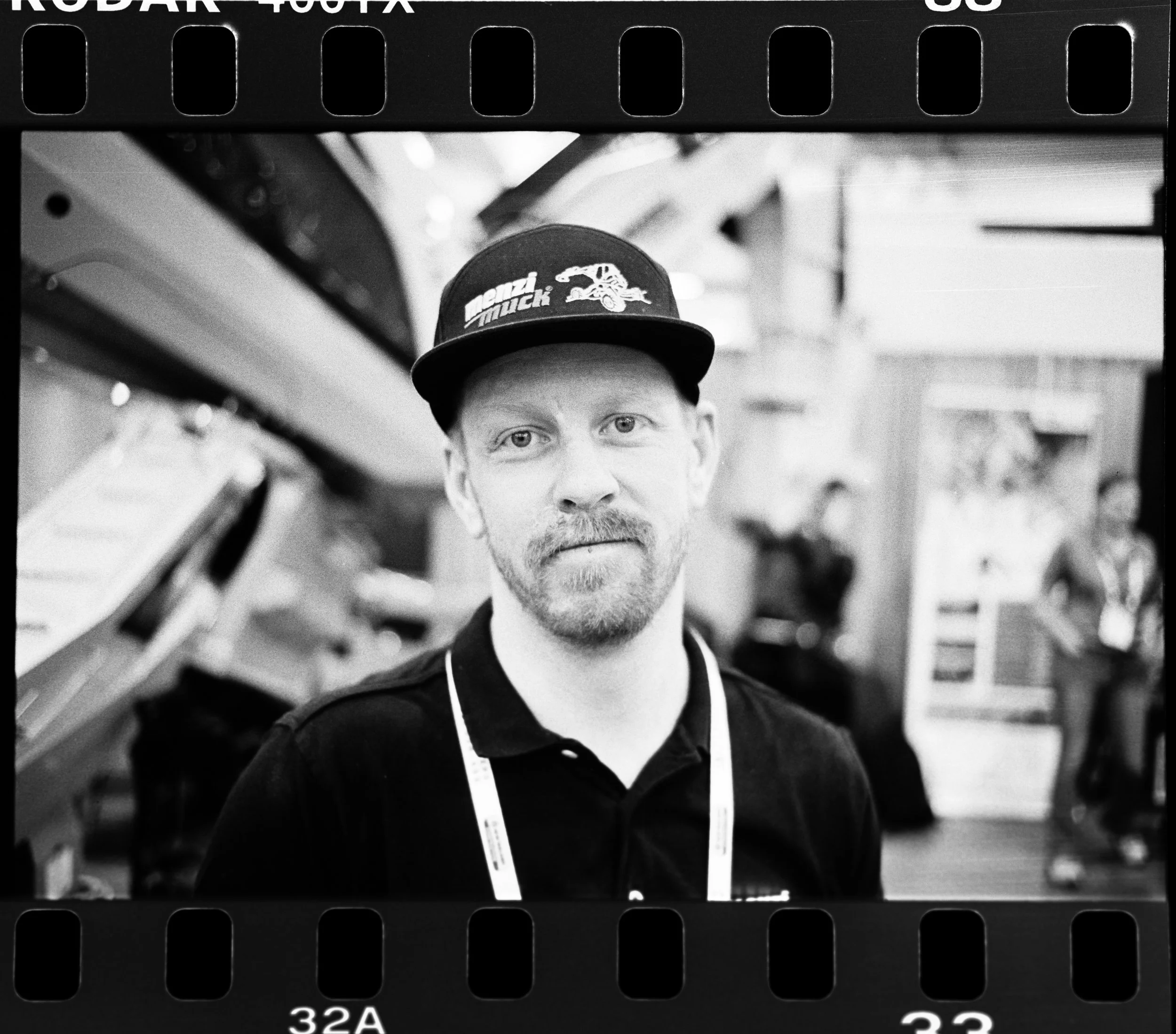
Portrait of Kevin Soller in Las Vegas, Nevada at ConExpo 2026. Shot on 35mm Kodak Tri-X 400 film with Leica R6.2.
Kevin Soller's father was the superintendent of a golf course, which meant Kevin grew up with more good sand than most kids and their sandboxes.
"I was the little kid with Tonka toys," he says. What started as a fascination with the toy became a fascination with the real thing, and then with what the real thing could do.
"It was an infatuation with what machines could do. I was always intrigued with that grandiose, something bigger than me that I can control to move more material. It then built into, 'what can I do with that machine?'"
He grew up in Breckenridge, Colorado, and lives in Frisco now, and he has been operating heavy machinery for twenty years. Since 2017 he has run a Menzi Muck spider excavator for All Mountain Construction.
A spider excavator has articulating legs instead of a fixed undercarriage, which lets it work in areas a normal tracked excavator never could. Kevin works steep, limited-access mountain terrain, in places most equipment cannot reach. The margin for error is not measured in dollars.
The Other Life
"I don't know if a lot of people know it, but I was a professional cyclist for nine years."
The two careers were never separate. Excavation is what paid for the racing.
"The reason I was able to race was that I had a backing of excavation. I had found a niche that I could make decent money. Work for a bit, go race, work for a bit, go race."
He made the US National Team as a road cyclist. He was racing in Belgium when he crashed.
"I don't really remember the accident itself, but I crashed at close to 50 miles an hour and landed on the right side of my head. Scars are still a little bit there. It's been almost 20 years, but I ripped the whole right side of my head off, broke teeth, broke bones, shook my head quite bad. I didn't know the extent of the head injury that I had."
He went home and kept racing road for two more years. The speed never frightened him. Something else did.
"My head was just not in it. I didn't trust people. Speed wasn't scary to me, thrill wasn't scary. But it was a trust aspect. Being in that environment, around other cyclists, that I just didn't like."
In a road race, you ride inches from strangers at speed and stake your life on their hands. He couldn't do it anymore. So he went back to racing mountain bikes, then downhill, then Enduro.
"It's weird that I quite literally touched almost every avenue of cycling professionally."
The injuries kept following him.
"Of course I think about it. Of course I think about where things would be if things didn't happen. But life plays cards for a reason. My character developed from hardships that I went through. It gave me a work ethic that is unmatched with a lot of my peers. I know how hard I can push. And I think that's something that I lean on in the machine. I know physically where I get tired and when I need to tap out."
Machinery Was Still There
The end of the cycling career wasn't a decision so much as an accounting.
"Although I was a professional cyclist, I wasn't making money. It wasn't the end goal that I needed to be rich, but I wasn't really even paying bills. Machinery was [paying the bills]. I started to have to make the conscious decision of, if I need to pay my rent, buy food, biking's not cutting it."
Machinery had been the thing that made the racing possible. When the racing ended, machinery was what remained.
"The love started to go away, but machinery was still there."
It took years and a few dead ends to find where he fit.
"I found a machine, I found a venue, I found an employer that gives me a lot of freedom. And it's a wild thing that at a young age I knew I wanted to be in machinery, but I have my dream job. And it doesn't go to waste on me."
When You Can't See Where I Went
Kevin works high in the mountains, on alpine ground that is slow to heal. Disturbance up there can stay visible for a long time. Heavy machinery has a bad reputation in places like this, and Kevin knows it. He doesn't see it that way.
"Yes, I burn diesel. But the whole idea is that we can be environmentally sensitive. It's a firm belief I have, that we can use machinery, with technological advances, to actually better the environment."
"What I really enjoy is that after a project, one of my favorite things is when you can't see where I went and my impact is gone. We're putting these machines in pretty aggressive areas, and to be able to look back and not show exactly where I was is a huge thing for me."
Own It
Kevin's first employer gave him a long leash and one condition.
"Early on, learning to admit when you mess up. I worked for a guy, my very first employer, who gave me a very long leash, and I was very hungry with wanting to do things. But he demanded that when you fuck up, you have to own it. It was this bit of integrity that came with it. I'm going to admit when I'm wrong, and I'm going to lead with confidence, not cockiness. But I'm going to ask questions when I don't know everything either."
The lesson he says he deals with daily is a different one.
"I am not perfect. I don't want to be perfect. If I get to being perfect, I need to find a different industry. What keeps me engaged in these machines is that there is a continual growth. There's a project that, 'oh, what could I do better? How could I manage my materials better? What could I have done differently with that excavation?' To me, it's a game. And to me, that is the fun part."
He has watched what happens to operators who stop asking. "They're stale. They've been doing the same thing for so long, but they don't have that internal drive of trying to better themself."
It isn't about being better than anyone.
"It's not because I want to walk around and say, 'I've done things that you can't.' I literally don't care. High tides raise all boats. If I can help the new younger guys learn from things that I messed up, especially in the industry that I work in, where it's a fatality if some of these things go wrong. So the more that we can raise each other up, learn from each other's mistakes, it's for the better good of everyone."
Coping With Hardship
When the days get heavy, he goes back to what cycling taught him.
"Taking care of myself, eating well, hydrating. I know when things start to get heavy, I need to move. I've learned about bilateral movement, that it's quite literally even something as simple as walking. I have a very fast paced brain, so there's times that I just need to isolate everything and calm down."
Breathwork helps, he says. But what helps more is the walk, and the mountain makes sure he takes it. There is no truck parked three minutes away. To get off the job site, he has to hike down.
"At the end of the day, I have to go get my heart rate up. And 10, 12, 14 hour days in a machine, it's very hard to get yourself to go do something physical afterwards, [but] when I'm forced to do that [hike down the mountain] directly out of the cab, it really levels things out for me."
His coping is healthier now than it used to be.
"A bit of my life changed for the better in a way I couldn't have ever predicted. I removed alcohol. That was a problematic part of my life. I didn't like who I was. I didn't like how I was coping. I didn't like who I was becoming. And turns out I was dealing with stresses from job sites in a way that I thought was okay. It was just, I thought this was the way. 'You run machines and you grab a bottle and we all bitch together.' And turns out you remove that and you stop bitching so much, and you learn that 'sun's coming up tomorrow. Let's make a day of it.'"
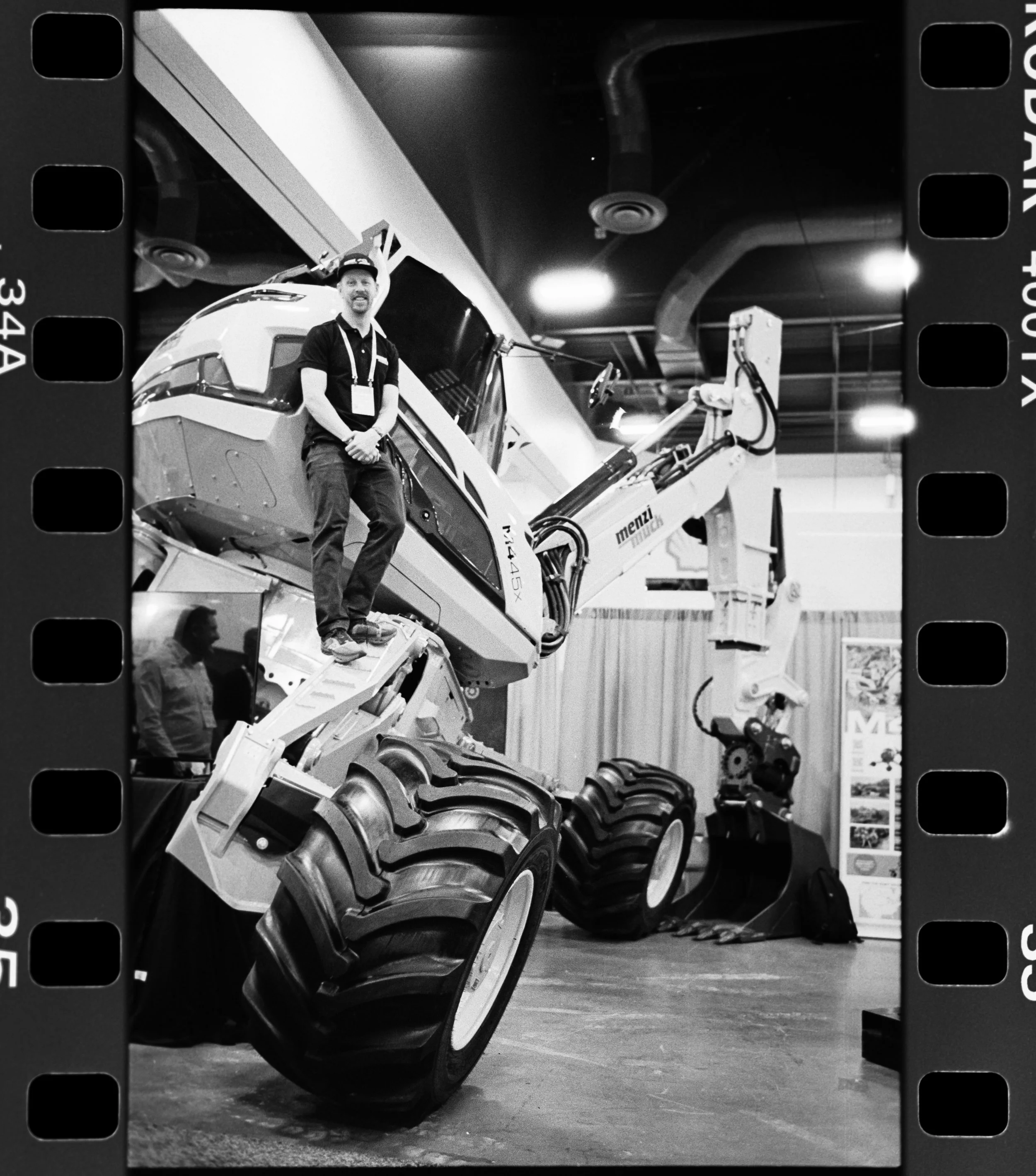
Kevin poses proudly on a Menzi Muck Spider Excavator at ConExpo 2026 in Las Vegas.
The Same Smile
Asked what he hopes still stands ten, twenty, thirty years down the road, Kevin starts with the steel and moves quickly past it.
"I hope the physical aspects, some of the lifts that I've been working on, are still standing. But I hope there's a continuation of new individuals moving into this industry that have that same fire. It's the little kid with a Tonka toy. It's someone that realizes that you can run a machine that weighs 150,000 pounds and move something that's greater than anything you could ever do by hand. There's going to be automation, there's going to be autonomy, but there's still a necessity for the human mind and the dexterities that we provide in the machinery. Trades aren't going anywhere. Dirty hands, clean money."
After the crash, the injuries, the career he lost and the one he built, ask Kevin his favorite thing about this industry and the answer is the same one a five-year-old would give.
"Plain and simple, just tractors. I'm 37 years old and I'm walking around looking at machinery [at ConExpo], and I see a three-year-old looking at the same tractor, and you see a 78 year old looking at the same tractor, and we all have the same smile. It doesn't need to be anything super layered or big. It's just, I love tractors."
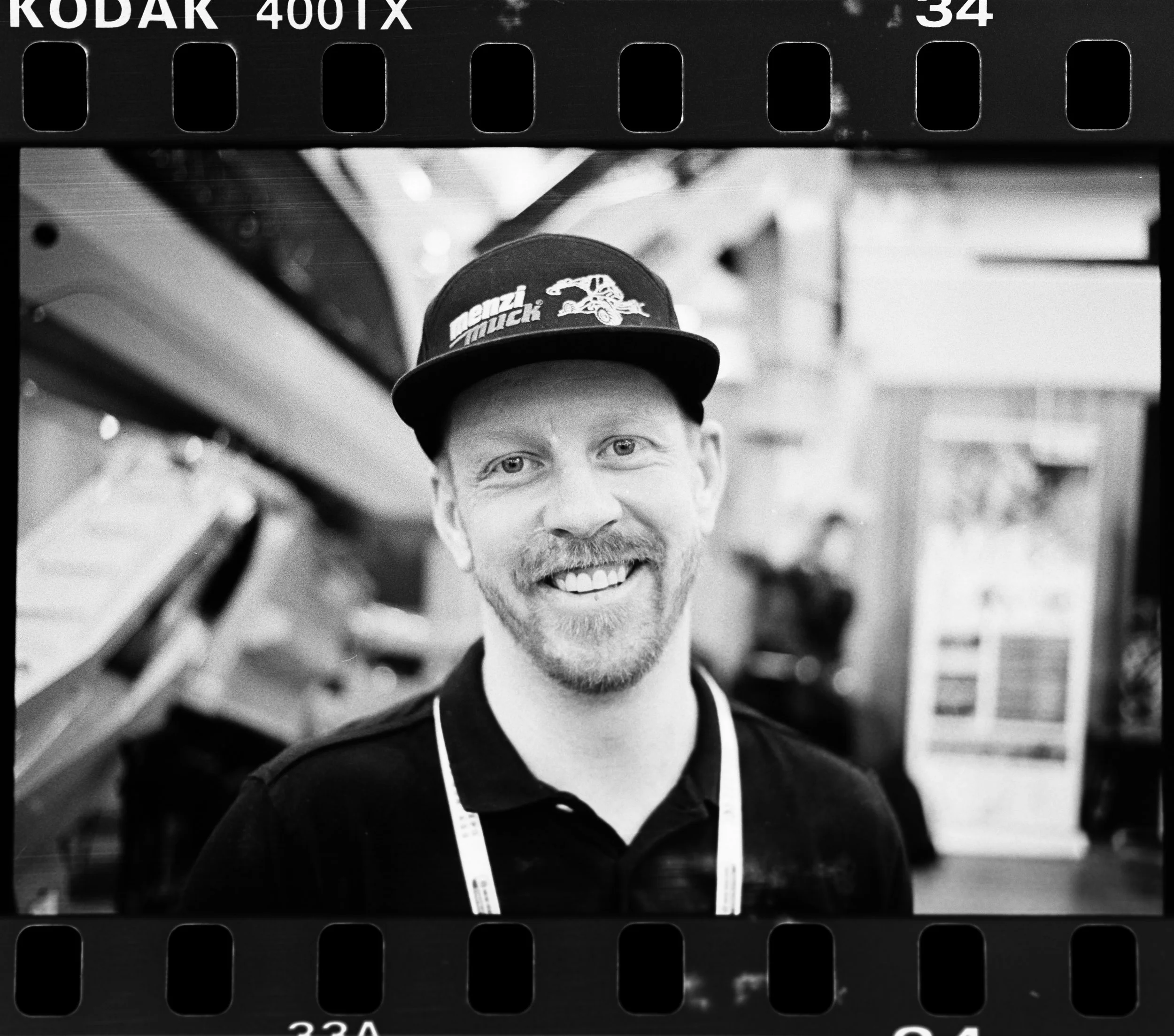
Kevin Soller is a Spider-X Operator at All Mountain Construction and lives in Frisco, Colorado.