009 - Michael Fila
I Know That I Can Because I Have
A profile of Michael Fila, co-owner, Red Mountain Land Management
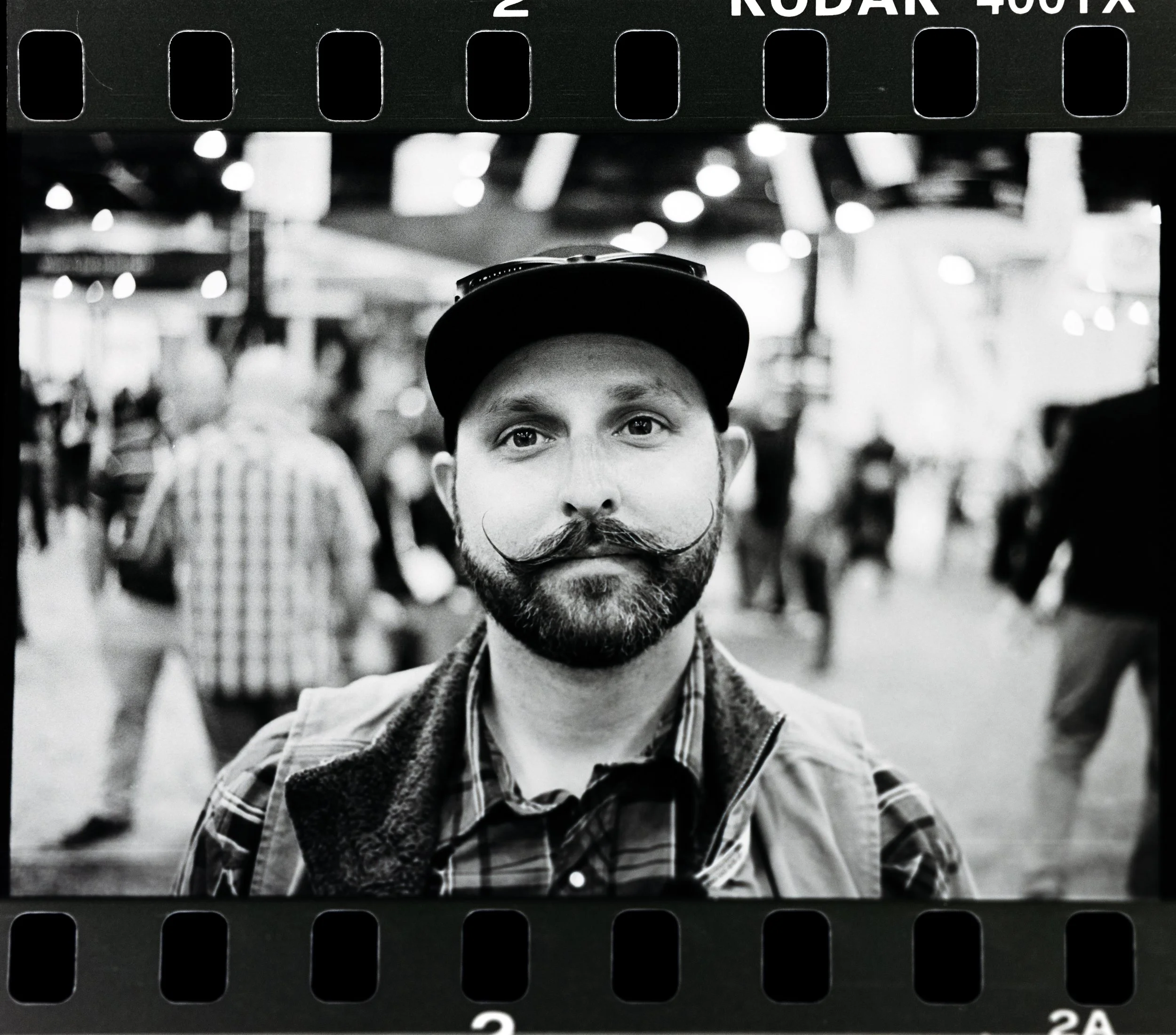
Portrait of Michael Fila in Las Vegas, Nevada at ConExpo 2026. Shot on 35mm Kodak Tri-X 400 film with Leica R6.2.
At 21, Michael Fila thought his life was over.
He'd just been diagnosed with multiple sclerosis. The things he loved and had spent his whole life moving toward, firefighting, law enforcement, the outdoor first-responder world, suddenly looked closed to him.
"In my head at the time I thought my life was over," he says. "I couldn't do firefighting. I couldn't be a law enforcement officer. I had experience and those are things I loved and I couldn't do it anymore."
Today Michael co-owns Red Mountain Land Management, the Fallbrook, California company he runs with his business partner, Connor. They do grading, excavation, demolition, and fire contracting with Cal Fire and the Forest Service. He works outside every day.
"I thought I was never going to work outside again, and now all I do is work outside. So it's actually, physically, mentally, it's been a lot better."
How he got from the first thing to the second is the whole story.
Around It His Whole Life
Michael grew up in New York, around the work long before he was old enough to do it.
"I did volunteer firefighting in New York when I grew up, and my dad worked for the highway department. So I was around road clearing and paving, all that kind of stuff. As a kid, I'd just go to work with my dad, help him out. He ran the highway department. So we'd go cut trees out of the road, help out with his buddies who had tree companies or grading companies. So I've been around trucks, equipment my whole life."
In high school he ran excavators and cut trees through an urban forestry program. At 18 he joined the Marine Corps, where he'd spend about ten years, doing law enforcement and, for a stretch, running a 9-1-1 center. The first-responder life wasn't a job he'd landed in. It was who he was. Which is part of why the diagnosis hit the way it did.
The Ride
Ask Michael what the ride has been like, and he goes straight back to 21, and to everything that felt foreclosed. But the way back didn't come by force. It came through a camera.
"I started doing photography as a therapy. I could still get out there, be around firefighting."
The photography kept him near the fire world, and eventually it walked him toward the equipment.
"I was taking photos with dozers on Camp Pendleton. They do a dozer training out there called Heavy Equipment Interagency Safety Training. I started taking photos of that and I was hooked with the equipment. And that's how I met my business partner, through the people running the dozer program. They were family friends of his."
That connection pulled him into the dozer world, and he and Connor started Red Mountain in 2022, firefighting with dozers first, then grading, excavation, and demolition. A man who came up in fire and law enforcement was now running heavy equipment on fire lines.
"Now I do dozers with fires. Kind of full circle."
I Know That I Can Because I Have
When a day or a week or a job gets hard, how does he keep his head up? That answer took years to earn.
"It took me some years to get into good mindset after being diagnosed with MS and working 9-1-1, where I was like, 'Oh, I can't do something because it hurts. I can't go work out. I can't go walk. I can't go hike.' I finally got over into a Marine Corps mentality where 'I know that I can do this. I know that I can do anything.' I kind of reverted into that. I know that I can do it because I HAVE done it. And once I changed my mentality on that, that's what I use every day."
He's clear about the limits, too. Real medical issues, he listens to. But tired isn't the same as done.
"If I'm just tired or whatever it is, I push through it because I know that I can, because I did that when I was in the military."
Owning a business sharpened it further.
"When you own a business, you don't really have a choice. It's either this works or it does not work. Connor and I stepped off on this trail and I'm going to do whatever it takes to make it work."
Something Bigger Than Yourself
Not everyone flips that switch. Plenty of people sit in the "woe is me" of it. What does it actually take to make the turn? Michael's been asked before, and he's honest that he doesn't fully know. But he traces it to two things.
The first goes back to the firehouse.
"Growing up with the volunteer firefighting, my parents doing that, it's always like there's something bigger than yourself. Cal Fire doesn't have enough equipment to fight this fire, so they call us. So who else is going to go out there and do it? If it's not us, who else? If we're doing a slope repair, someone's house could be washing down a hill. It's real life stuff. You have to be able to understand that what you're doing is bigger than you, and you need to be able to step forward."
The second is something he learned in the hardest rooms he's worked.
"You have to compartmentalize in your head. And that maybe is from me doing law enforcement and firefighting. With 9-1-1, I would get a phone call. If I got people there as quick as I could, there's nothing else that I could do to affect change in that situation. If someone did pass away, there was nothing else that I could have done. If I did everything that I can do, I'm okay with that."
That's the standard he carries into every job now.
"That's how we do our business. We do everything to the best of our ability and the best of our knowledge. And you can sleep well at night knowing that I did it right and I did it to my standard."
Do It Right
Ask what he's most proud of and it isn't a machine or a milestone. It's a standard.
"I'm just proud that we can show up and give someone a quality product, do the right thing. And even if it costs a little bit more or we didn't account for something, we're still going to do the right thing. We hold ourselves pretty high on how we want to do things and how we want to treat people. We want our reputation to be that Red Mountain comes out and does something right. And people call us because of that."
The work asks a lot in return.
"It demands a lot of mental toughness and it demands a lot of physical strength. You have to be able to have thick skin. You can't let little things get to you. Usually if something's going to go wrong, it's going to go wrong. And you have to be able to just mentally overcome it and show up physically when whatever the job demands of you."
Ask Michael what it means to be a blue collar worker, and he goes straight to everything that depends on it.
"We're doing essential services that people need. The world is not going to keep rotating and working the way that it needs to if we're not doing what we need to do. You can't have roads and infrastructure if you don't have people doing that work."
The People
For all the equipment, his favorite thing about the industry is the same one he found in the fire service and the Marines.
"There's just like a camaraderie when you talk to these different people. I meet people from different companies and you just connect with people and they have your back. You find some of the best people that you ever met through this type of work, because they show up for you, you show up for them, and coworkers become best friends. We have some really good friends with people that we've worked with, and now we all help each other out."
Take Care of Your People
Asked what message he'd give the industry, Michael doesn't talk about machines or margins. He talks about how people get treated.
"Make sure you're treating your people right. We come into contact with people all the time where they just don't get treated well by other companies. If you don't take care of your people, how are they going to take care of you? If your employee isn't doing well or needs help or has to go take care of something, be there for them. It's kind of a 'suck it up' type of world, and I think there needs to be a little bit more care for the employees. Not everyone's expendable."
He's watched companies bleed good people over exactly this.
"Even if you give a little bit of compassion to someone, you might keep them around for a lot longer. You invest in your people and they're going to stay with you. You don't take care of your people, they're not going to stay. Be more compassionate towards your employees. Take care of them."
It's a fitting thing to hear from him. At 21, Michael was the kind of person an unforgiving world might have written off as expendable. He wasn't, and he found a way back to the work he loved. Now he spends his days telling the industry not to write anybody off.
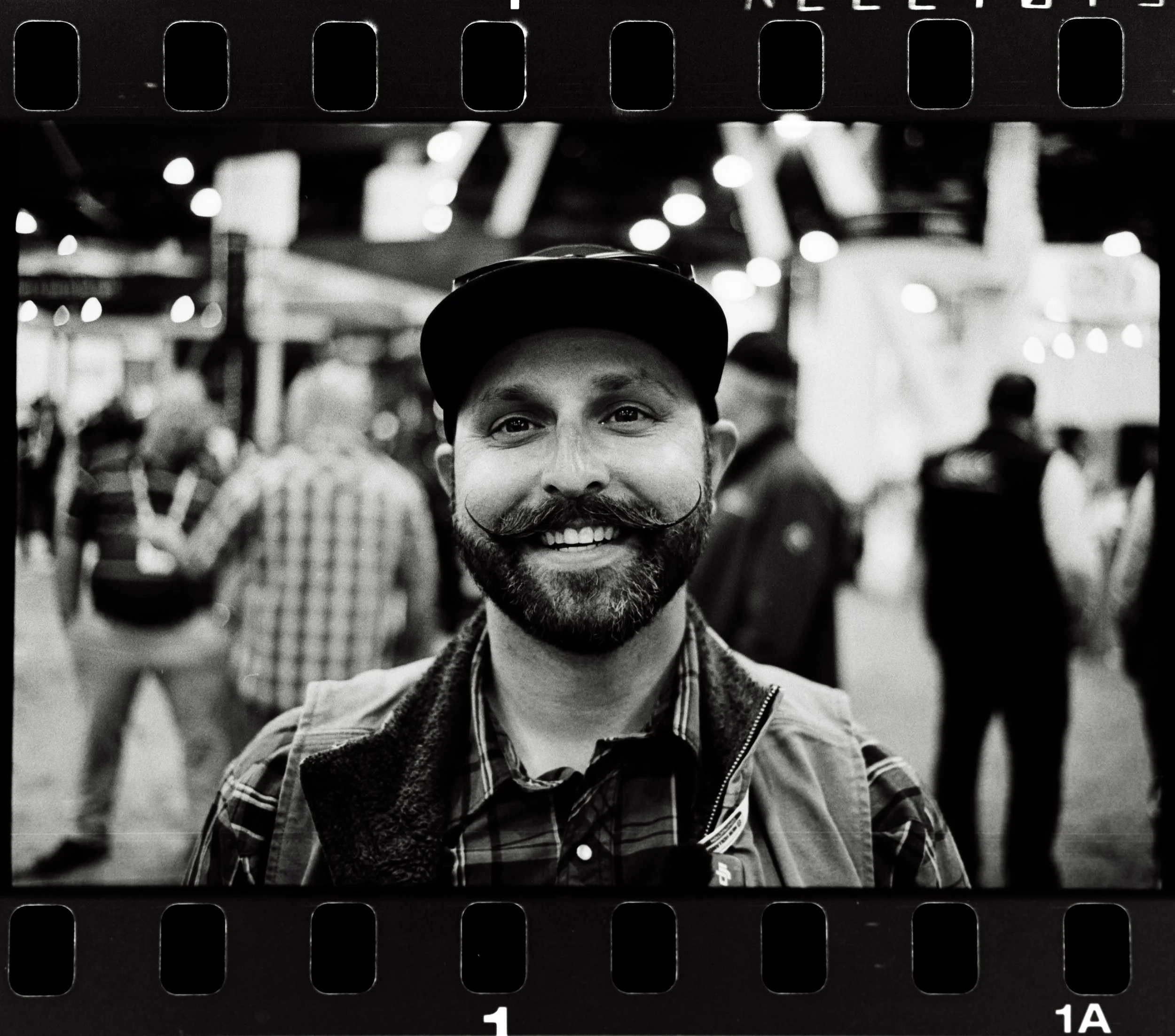
Michael Fila is co-owner of Red Mountain Land Management, based in Fallbrook, California.