012 - Ryan Chrisman
Forty or Fifty Years
A profile of Ryan Chrisman, heavy highway superintendent, Sporer Land Development
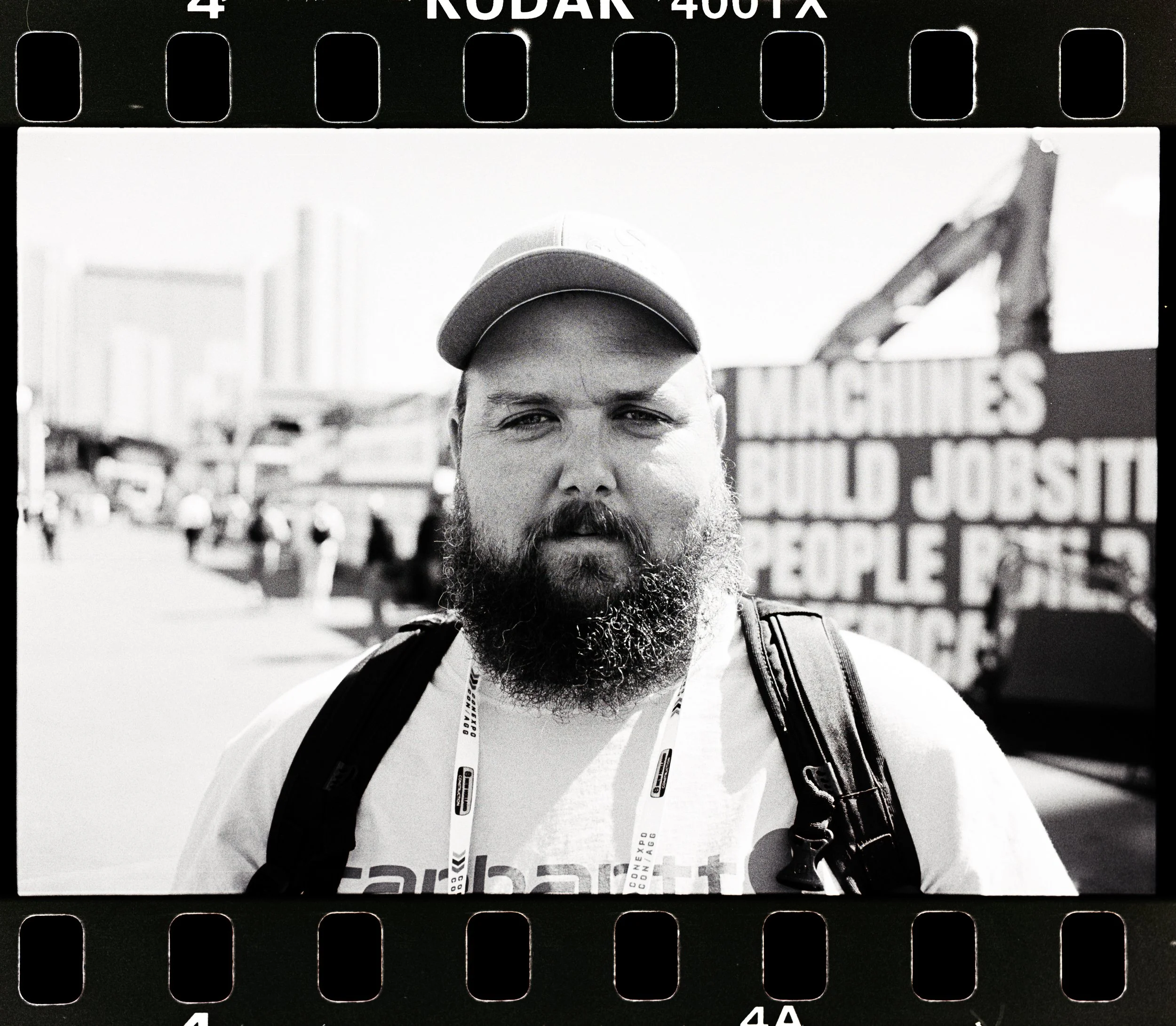
Portrait of Ryan Chrisman in Las Vegas, Nevada at ConExpo 2026. Shot on 35mm Kodak Tri-X 400 film with Leica R6.2.
When Ryan Chrisman was a kid, he rode around with his granddad and watched him work.
"My granddad was a really good blade operator and I got to ride around with him when I was a kid a lot, and had a lot of good 40, 50 year seasoned operators, and those guys were kind of my heroes growing up as a kid. I always wanted to be like them. And that's just the path I followed."
What stuck with him was how long those men had given to it.
"I always wanted to be able to say that I have 40 or 50 years dedicated to a craft and kind of be considered an expert at it, and just keep working towards that goal."
That's still the goal. Today he chases it from Western Nebraska.
"I'm a heavy highway superintendent for a company, we do a lot of road work, feedlots, airports, whatever we can get ahold of. Just mainly dirt work."
Out in the World
The work runs back through both sides of the family, and into his own childhood.
"My grandpa had a company. My dad owns a company. I just kind of grew up working for them and playing around on their equipment. And eventually [I] went out in the world, found a different company to work for."
Ask how long he's been at it, and he counts it two ways.
"Full-time 22 years. I started running equipment when I was about 10 years old, so about 30 years."
Ask if he ever thought about doing something else with his life, and the answer is immediate.
"Nope. I wanted to play in the dirt my whole life. Always wanted to be a blade hand. That's always kind of been my passion and didn't ever really want to do anything else with it."
Tangible Progress
For Ryan, the work is something you're never done getting better at. That's what he means when he calls it a craft.
"I think it's good for people to have a focus in their life and their career to kind of keep working towards and improving themselves and getting better at, and learn more and more and keep progressing to kind of be the best they can at it. And so that's kind of what the craft means to me."
The pride comes from the same place, work you can put your name behind.
"Just being able to turn out good quality work that you can be proud of and the customers are happy with, and get it done safely and on time and make money while you're doing it."
And he'll take it over anything indoors. Ask how he feels about being a blue collar person, and he doesn't hedge.
"I love it. I couldn't sit in an office inside of a building all day. I got to be out in the weather and the elements. The nice thing about blue collar work is you can kind of, at the end of the day, look back and see what you did throughout the day. There's tangible progress that you can see what you're accomplishing every day."
That daily, visible progress adds up to something bigger than the day.
"It just gives you a big sense of pride and accomplishment in your life to know that you are doing something productive and moving society forward and improving life for everybody."
Break Through
When the hard days come, his answer for getting through them is simple. You solve the thing in front of you.
"You just learn how to problem solve and make it through the issues. And sometimes it is a challenge, but when you do finally break through and solve the problem, it's hugely rewarding to be able to look back and know you made it through the issue and you figured it out. It just makes a guy feel good at the end of the day when you solve a problem and get back on track."
Up the Ladder
Ask Ryan how the work has changed him, and he goes to the part he had to learn that isn't in any machine.
"As I've kind of climbed the ladder throughout my career, you're always learning new leadership skills and becoming better and better [at] communicating, leading people. You've got all kinds of roles when you get into the management level. There's a lot to learn, how to talk to people. Everybody's different. Some people you have to talk to differently than other people because they receive how you're talking to them differently. You just have to keep evolving your social skills and leadership skills to be able to keep moving up the ladder and taking on more and more responsibility."
Give Them a Shot
Ryan sees the work as essential, in the plainest terms.
"The world wouldn't run without trade work and skilled tradespeople, and it's definitely something to be proud of to help develop your communities and do your part to keep society moving."
Which is exactly why the thing he'd say to the industry is about who comes next.
"We just need to get better at recruiting and accepting new people no matter where they come from. If they want to give it a shot, we need to give them an opportunity. There's something like 40% of our workforce is going to retire here in the next 10 years, and we need to be figuring out how to get more people involved in the trades and into the industry so we can keep going. We're going to be in a bad spot if we don't fix the problem."
If that workforce problem doesn't get solved, Ryan thinks the cost lands on everybody.
"Construction costs are going to skyrocket because contractors won't be able to do as much work without people, and it's just going to get more and more expensive to do the work because there will be a shortage of skilled labor out there to get it done, which means the price goes up."
The other half of it is how the trade gets seen from the outside, an image he says is just wrong.
"There's still kind of a stigma out there in the world that it's just dirty, dingy work, doesn't pay very good, and that's not the case at all. You can make a very good living in trade work and it's easy to get into. You don't really need an education to do it. Just show up and learn on the job and go to work and make a good living."
It's the same door that was open to him as a kid riding along with his granddad, and he wants it to stay open for the people coming up behind him.
Ask Ryan his absolute favorite thing about the work, and he doesn't reach for the money, the machines, or the technology. He reaches all the way back to the start.
"I just was a big kid. I like pushing dirt around. That's kind of the long and short of it. It's always what I wanted to do, and I'm doing it."
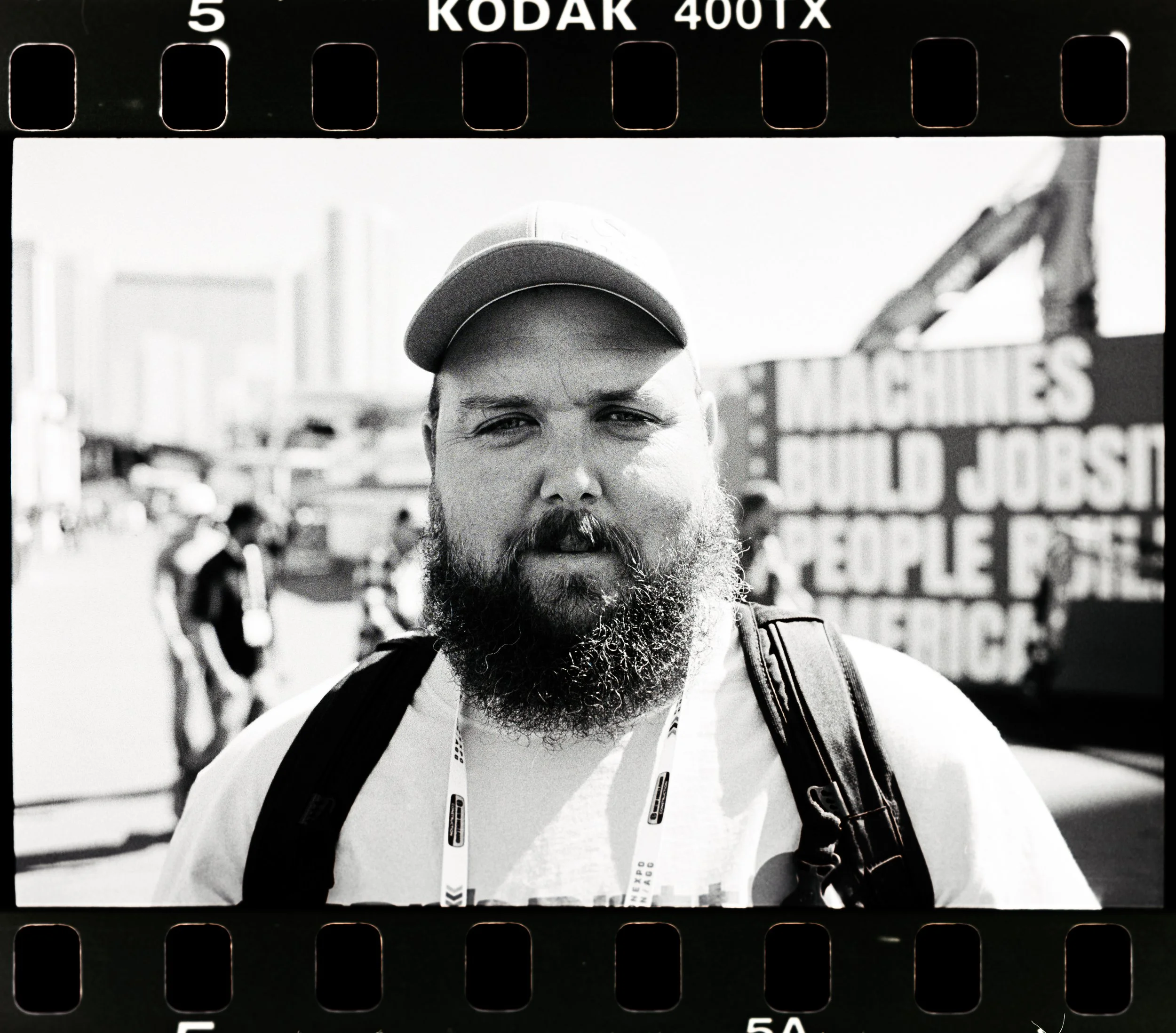
Ryan Chrisman is a heavy highway superintendent at Sporer Land Development, based in Western Nebraska.