Life Starts Now
A profile of Ryan Goodfellow, founder, owner, and general manager, Rock Structures Utility and Excavating
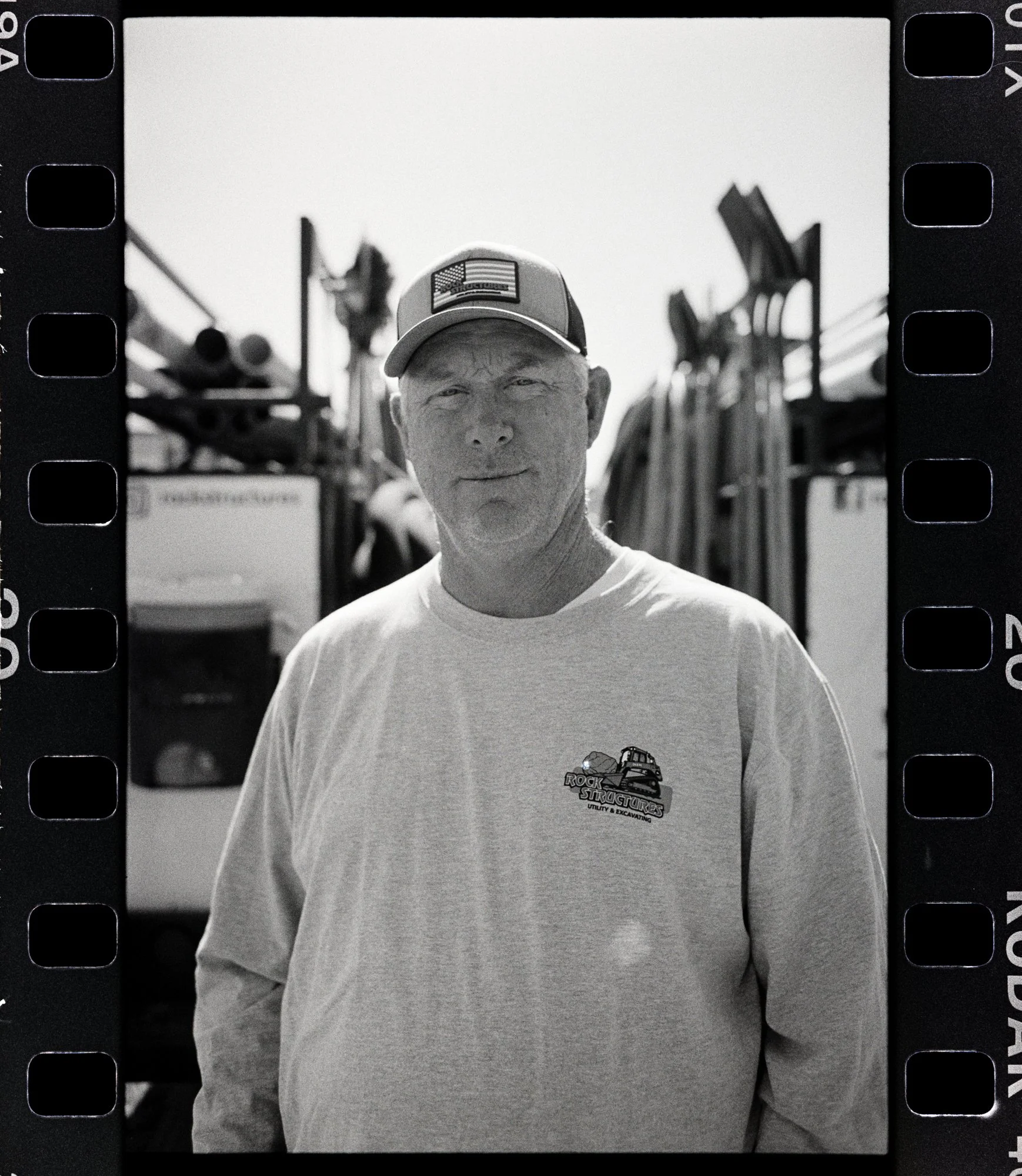
Portrait of Ryan Goodfellow. Captured on a residential construction project in Morgan, Utah, August 2026. Shot on 35mm Kodak Tri-X 400 film with Leica R6.2.
“I didn’t want to go to school. I moved out of the house when I was 19, moved 800 miles away by myself and figured out what I wanted to do in life and made it work. And here I am, 29 years of being in business and I didn’t go to school.”
Ryan Goodfellow made that move from Southern California to Utah.
“I came up with a Ford Ranger, a dirt bike in the back of my truck, a dresser, and all my clothes were stacked in the passenger seat next to me. And I think I had like 350 bucks. I remember very distinctly having a conversation with myself driving to Utah. ‘Life starts now. It’s up to me if I’m going to make it work.’”
The Family Business
He grew up around heavy equipment. His dad and brother started a business hauling heavy equipment around Southern California, and his brother-in-law came in shortly after.
“My dad moved equipment around in Southern California and that was his job, coordinating semi trucks, his semi trucks with his low beds, and moving equipment around for different developments and different building sites.”
Ryan went to work for them at 13 or 14. It didn’t stick.
“I figured I didn’t really want to drive a truck. I didn’t want to learn how to drive a truck. I didn’t want to work with my brother, didn’t want to work with my dad, didn’t want to work with my brother-in-law, just kind of wanted to do my own thing. Most kids, when they’re 16, 17, 18, they don’t really want to work with their older brother. You want to get in a fight [with each other] all the time.”
So he left.
“Just after I turned 19, I decided that I wanted a change of pace.”
In Utah, he stayed with a friend’s family in their unfinished basement for about a month, then moved into an apartment with another friend for 3 or 4 years.
Allowed to Fail
He started on a shovel.
“I started out on a shovel, 7 bucks an hour, maybe 7 and a quarter an hour. I’m old, so that was back in ‘94.”
He credits the man he worked for with a lot more than a paycheck.
“The guy that I used to work for, total stud, awesome, awesome, awesome guy. I owe him a lot. He allowed me to learn, not necessarily taught me, but allowed me to learn how to do what we do every day, allowed me to fail. And that’s huge, and didn’t chew me out, just understood I was a kid trying to figure it out.”
Over time, Ryan took on more and more responsibility, and the work followed him to his boss’s dinner table.
“I was bidding work, I was scheduling work, I was doing work. I was then going over to his house in the evenings and his wife was awesome. She would cook us dinner and then we’d sit down at the dinner table and we’d start going through the invoice and talking about what I did. Then they would give me the invoice and I would go collect on the invoice the next day.”
He was young for that much responsibility.
“At one point in time I was the youngest there and I had the most seniority there.”
So he asked for a raise.
“I decided that $11 an hour wasn’t what I wanted. I told him I wanted $13 an hour. He said, no, I can’t do it. I’m like, bullshit, you can’t do it. You can’t not do it.”
At 21, he went out on his own.
“When I was 21, I decided that I didn’t want to work for him anymore because I had been raised in a family that owned their own business, my uncle owned his own business, so I had been around it my whole life. I didn’t know what I was getting myself into besides that I knew that I could do it for my old boss, so why couldn’t I do it for myself?”
He started his business and got married the same year.
The School of Hard Knocks
The years since haven’t been easy.
“There’s been a lot of ups and downs. There’s been a lot of trials. I never really had a mentor except for my dad and he helped me through things and he gave me advice and he gave me a little bit of money here and there and I kind of pissed it away and made sure that I tried to make it back up to him. I didn’t pay him back everything, but then again, you don’t really ever pay your parents back everything because what they give to you and what they provide for you really is, it’s priceless.”
He puts his old boss in the same category.
“What my old boss did for me was priceless. I’ll always be grateful for the opportunities that he gave me and for just the willingness he had to take on somebody like me and give me an opportunity and take the risk on me. Without him I wouldn’t be where I’m at for sure.”
The rest, he learned on his own dime.
“I’ve paid enough tuition as it is with my business. I’ve paid for school, hell, I don’t know how many times over, just school of hard knocks and just things that I have to learn on my own.”
What he takes from all of it comes down to what a person decides to do.
“If you want to learn, if you want to understand, if you want to do, you can, you definitely can. Your mind’s a powerful thing.”
The Algebra Lesson
People sometimes assume the trades are where you end up when school didn’t work out. Ryan sees it differently.
“If you don’t want to go to school, you don’t want to go to college, it doesn’t necessarily mean you’re dumb. It just means you have other things you want to do.”
In school, he couldn’t stand math.
“I hated math. I absolutely hated math. I flunked algebra and I was pissed at my mom because I’m like, ‘I don’t want to do this.’ And she’s like, ‘You can do it.’ I’m like, ‘No, I can’t do it.’ And she’s like, ‘No, you can do it.’ I’m like, ‘No, I can’t do it.’ Well, sure as shit, I told myself I couldn’t do it, so I couldn’t do it.”
Looking back, he sees it differently.
“It’s funny now because everything we do every single day, there’s a math equation that goes into dirt work. It’s like, holy hell. The things that you are learning in school takes you and sets you up for life.”
It’s part of what he tells young people now.
“I always tell kids all the time, ‘As soon as high school’s out, as soon as school’s out, life begins.’ And life isn’t easy and life will do whatever it wants to do to you. If you have that mindset that something’s going to happen to you, something’s going to happen to you, I guarantee it. Positive or negative, it’s going to happen.”
Six Inches Down
Rock Structures is mainly a residential excavation contractor. The crews dig basements for high-end homes, build rock walls, backfill foundations, and cut long driveways through mountainous terrain. They also put in water, sewer, storm drain, and irrigation lines for new subdivisions.
“No two jobs are the same. Every day is different for us. We’re not dealing with stakes a lot of times. A lot of times it’s creative and we’re getting to the point to where our guys have to use their creative side of their brain rather than rely on a stake that tells them a cut or a fill or an offset. It’s not easy. Things are always changing. As soon as you dig into the ground, it could change 6 inches down. Just depends on what’s under the ground that you don’t know about until you dig a hole.”
For a long time, construction has carried a reputation as hard, dirty work, and plenty of young people steer clear of it because of that. If there’s one thing Ryan would change about the industry, it’s how people see it.
“The whole outlook of trades and just the [stigma] that goes with it, that needs to change. It’s not a dirty job. It’s actually a fun job. You get to be outside, you get to do different jobs all the time. You don’t have to just go sit in an office and go be in a cubicle, staring at a screen all day. Yeah, you get heat, you get cold, you get rain, you get snow. It doesn’t really matter. You just work through it. As human beings, we figure things out. We work through things, we work past things, and that’s what makes us all unique individuals. If we can’t figure it out, we don’t just end it. We keep rolling with things.”
Like so many others who work in the trades, he likes being able to point at the finished work.
“When you’re done with something, you’ve got something right in front of you. Sure, sewer, water, buried utilities, they’re buried when you’re done with it, but you see the manholes, you see the fire hydrants, you see the curb and gutter, and you know what you’ve done. Even though you can’t see it [when it’s finished and buried], you know what you’ve done there.”
Taken for Granted
The buried work is also the work nobody thinks about.
“Everybody has to have water. Everybody has to have sewer. Without water, without sewer, you don’t have water to drink, you don’t have water to take a shower, you don’t have a flushing toilet. We install fire hydrants, so when you have a fire, you got to go hook into a fire hydrant and then fight the fire with the water from the fire hydrant. So those are all things that we do. And a lot of times [the lines are] buried, so you don’t really think about it because you don’t visually see it.”
He’s clear about how much rides on that work.
“100% of the general population relies on what happens from what we do from the ground up. If you don’t have concrete guys, you can’t pour a foundation to put your house onto. If you don’t have framers, you don’t have the ability to build a house. If you don’t have a plumber and electrician, you don’t have running water, you don’t have lights, you don’t have power to run your refrigerators. There’s just an ongoing list of jobs that people take for granted.”
The Right People
Running a company means finding people, and keeping the right ones.
“Having the right people in the right places at the right time means everything. Your success as a business owner is really based off of the people that you surround yourself with, as does anything in life. They say that the people you hang around with, that’s the type of person you become. And there’s a lot of truth to that, and you can decide whether you want to be successful or not. It’s all in your mind. It’s a mindset. Success isn’t measured by money, it’s measured by happiness.”
Paid to Learn
New hires sometimes show up with a little seat time and a lot of confidence.
“I had a kid come work for me one time that, ‘Oh yeah, I know how to run equipment.’ He probably had, I don’t know, 60 or 80 hours, 100 hours in machines, and good kid, super good guy. And I’m like, ‘Okay, well, I’ll tell you what. I’m going to put you in the ground putting in pipe.’ And a couple months in, he says, ‘Dude, I never realized how much there is to know on a site. Just because I know how to run a piece of equipment doesn’t mean that I can do it.’”
That’s the part he says people miss.
“People just don’t understand there’s a whole bunch more to it than just running a tractor.”
On his crews, that learning comes with a paycheck.
“They’re getting paid to learn. They’re getting paid to understand what’s going on with things and they’re learning a valuable lesson. We teach them how to do everything from the ground up.”
When one of his daughter’s friends told him he was doing oil changes at a dealership but wanted to be a diesel mechanic, Ryan pointed him toward the people who might help pay for the training.
“What you need to do is you need to go to your equipment dealers around here and talk to them. Tell them what you want to do. And a lot of times that equipment dealer will bring you on, they’ll hire you on and then they will pay for your schooling or they’ll help pay for your schooling. And then next thing you know, you become an asset to that company.”
Earn It
For years, people have said millennials don’t want to work. Ryan doesn’t like to hear people complain about the younger generations.
“I personally think that my generation had a bunch of shitheads in it too. Every generation has people who don’t want to work. I know so many kids that fall into that millennial category that to me, they’re just younger generation. They’re out killing it.”
He sees himself in them.
“I’m their biggest fan because I was once where they’re at now. I started my business when I was 21, just like they started their business when they’re 21, 23, 25, whatever. They want something, they go after it.”
He also knows the money is harder now than when he started.
“Nowadays, working a shovel, you’re starting out at 20 bucks an hour, 22 bucks an hour, 18 if you really don’t know anything. But honestly, it’s so hard to even make ends meet now at 20 bucks an hour. I ask myself all the time, ‘How are these guys making it work?’”
He’d like to see pay go up, as long as people earn it.
“I’d like to see wages go up. But if you come to work and you want to show initiative, you want to show drive, you want to show determination, you prove all that, that’s value. You’re bringing value to the table. If you just want to stand around on a shovel and just watch everyone else work, there’s no value in you.”
And he’d like to see the ceiling go a lot higher.
“I personally want to see this industry, these operators of these machines, I want to see them making what doctors are making. I want to see them making what lawyers are making. I want them to be millionaires. Sure, without the doctors, we don’t get made better, right? But without the tradespeople, without the excavation contractors, without the plumbers, without the electricians, without the framers, you don’t have a house for your doctor to go live in. You don’t have an office for your doctor to work in, right? So how’s that doctor making his money?”
As for what the reward should be, he keeps it simple.
“To me, the reward is, first of all, seeing what you accomplished, but then being compensated fairly for what you just accomplished.”
Just don’t tell him anyone is entitled to it.
“Entitlement. I can’t stand that word entitlement. You hear these lawyer ads, get the settlement you’re entitled to. Bullshit, you ain’t entitled to nothing. The only reason why you’re entitled to it is because somebody told you you’re entitled to it. If you’re not willing to work for it, you don’t deserve it.”
Don’t Sweat It
The message he’d leave anyone with is one he’s always believed in.
“Just remember that you can do anything you put your mind to. I’ve always been a big believer in that. If you want to be happy, you’re going to be happy. If you want to be miserable, you’re going to be miserable. You control your attitude. If you want to be stressed about something, you’ll be stressed about something. If you don’t want to be stressed about something, you won’t be stressed about something. Just let it go. It’s water under the bridge. The more you worry, the worse your life gets. So as far as I’m concerned, don’t sweat the small stuff. Don’t sweat anything. Just figure it out and work your way through it.”
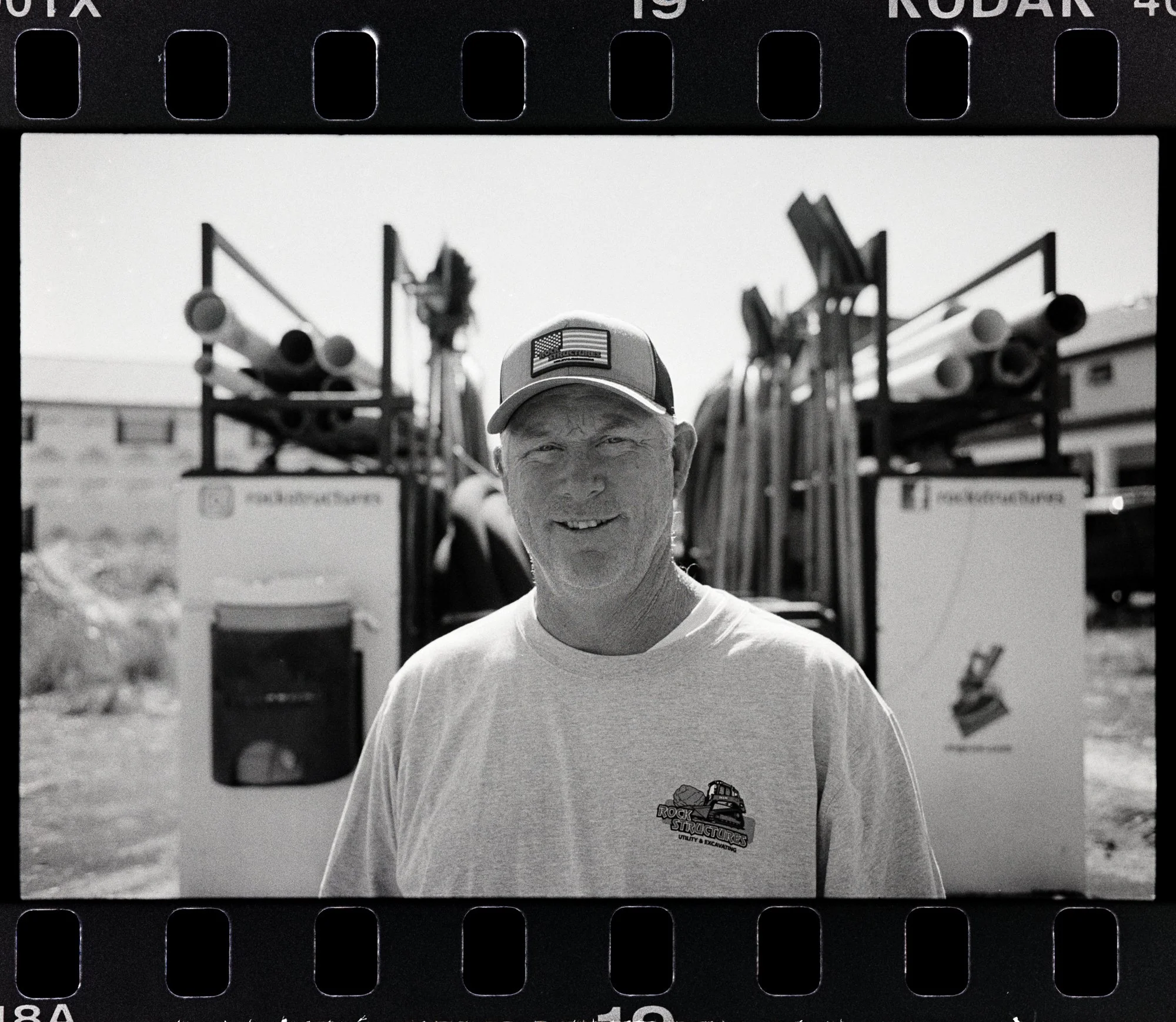
Portrait shot on 35mm Kodak Tri-X 400 film with Leica R6.2.
Ryan Goodfellow is founder, owner, and general manager of Rock Structures Utility and Excavating, based in Northern Utah.